By KureexPublished 8 min read
A licence is a narrow, specific thing: one named entity, one named activity, one country. Nearly every misunderstanding about crypto regulation comes from reading it as something broader.
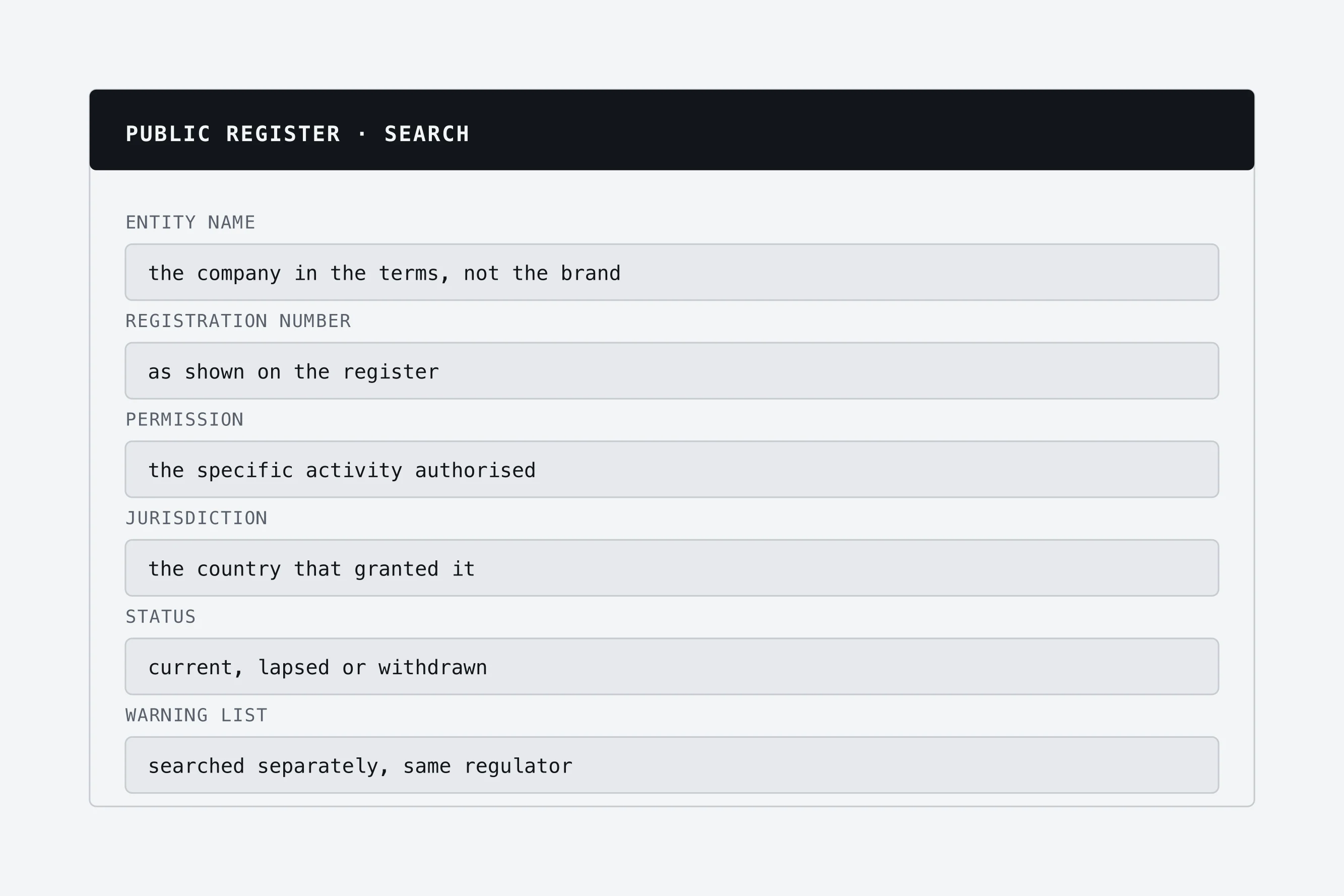
Verify the entity on the regulator's own register. The badge in a website footer is not evidence of anything.
The claim and the register are different objects
A site can display a regulator's logo, a licence number and a reassuring sentence without any of it being true, and doing so costs nothing. The register is the authoritative record, it is published by the regulator, it is free, and it is searchable by name or number.
The check that matters is: find the operating entity named in the terms of service, search that exact name on the register of the country claimed, and confirm the permission covers the activity being offered to you.
Group structures, and why the entity name matters
Large operators run several companies. One may hold a licence in a well-regarded jurisdiction while the entity that actually takes your account is incorporated somewhere else entirely and holds no such permission.
This is not necessarily improper — it is ordinary corporate structure — but it means the licence you were shown may not be the licence that applies to you. The terms will name the entity you are contracting with.
What registration usually is not
Several distinctions are routinely blurred in marketing copy, and each one changes what protection exists.
- Registration for anti-money-laundering supervision is not authorisation of the investment activity itself.
- A company registration number is not a financial licence; it means a company exists.
- A licence in one country does not extend to customers in another unless a specific arrangement says so.
- Deposit protection schemes typically cover bank deposits, and cryptoassets are frequently outside them.
- No regime compensates for losing money on a trade. Regulation addresses conduct and failure, not market outcomes.
Warning lists
Regulators also publish lists of firms they have warned the public about — usually unauthorised firms soliciting local residents, and firms that appear to be impersonating an authorised one.
Searching these is as quick as searching the register and is the check most often skipped. A name appearing there is decisive in a way almost nothing else on a website is.