By KureexPublished 8 min read
Identity verification at withdrawal is not automatically suspicious and it is not automatically legitimate. Regulated customer due diligence can continue after account opening, while a fraudulent venue can imitate the language of compliance to delay an exit. The distinction is in the process, disclosure and request.
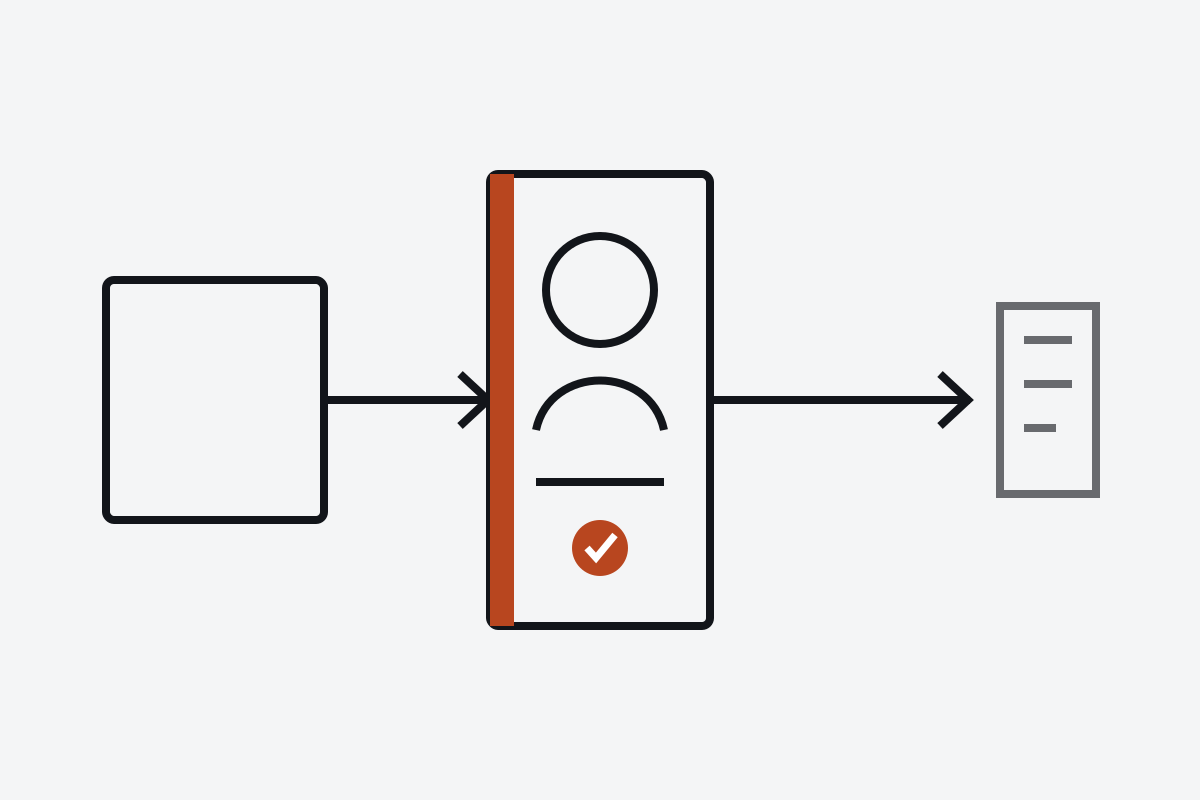
Verification asks for evidence of identity through a defined process. A release-fee scheme asks for more money to unlock money already shown in the account. They should not be treated as the same event.
Why customer due diligence exists
The Financial Action Task Force's recommendations describe customer due diligence as identifying the customer, verifying identity from reliable and independent sources, understanding the purpose of the relationship, and conducting ongoing scrutiny so transactions remain consistent with what the institution knows about the customer and their risk profile.Sources for this passage: FATF Recommendations — customer due diligence
That is broader than checking a passport once. It can include confirming who controls an account, understanding the source or destination of funds and resolving information that no longer matches the account record.
The exact duties belong to the law and regulator applying to the named entity. A platform's use of the word KYC does not prove that the entity is regulated or that its process follows those duties.
Why the timing can be later
Some services complete verification at onboarding. Others allow limited access and complete or refresh checks when a transaction changes the risk or when information needs updating. A withdrawal can expose a mismatch that an incoming payment did not: a different name, destination, jurisdiction or account owner.
Timing alone therefore answers little. The more useful questions are whether later verification was disclosed before funding, whether the request comes through the same secure account channel and whether the documents requested relate to identity or ownership.
An unexplained late check is a process concern. It becomes a different category of concern when each completed check is followed by a new payment condition.
A normal verification request has boundaries
A defined process identifies the entity requesting the information, the reason for the check, the secure method for supplying it and what happens if the information cannot be verified. Its privacy notice explains how identity material is handled.
The request is also connected to something verifiable outside the account screen: the legal entity in the terms, the regulator or public register it claims, and a support route on the same official domain.
None of those facts proves that a particular venue is safe. Together they produce a process that can be checked rather than a demand that must be accepted on trust.
The release-payment pattern is different
A demand for a tax, security deposit, insurance payment, liquidity fee or account upgrade before funds can be released is not identity verification. It is a request to send more money to recover money.
The labels may change while the structure remains the same: the withdrawal is blocked, an additional transfer is made, and another condition appears. The account balance on screen does not prove that withdrawable assets exist behind it.
This distinction is why a document request and a payment request should be recorded separately. Compliance language can be copied; the destination of the requested money is concrete.
What to preserve when the exit changes
Keep the version of the terms and verification policy shown before funding, the legal entity name, the account messages, the withdrawal status and the exact wording of each request. Record where each document or payment was supposed to be sent.
Do not send identity material through a new messaging account or a link whose domain does not match the service being checked. A real support process can be reopened from the account or official site without relying on the message that created the urgency.
If the process becomes a dispute, the bank or payment provider used to fund the account, the claimed regulator and the relevant national fraud-reporting route need the chronology rather than a summary.
Read the exit before the entrance
The terms should say when verification happens, which entity performs it, whether withdrawals can be suspended and which documents may be required. Reading those clauses before funding does not predict conduct, but it creates a baseline against which later demands can be compared.
The withdrawal page on this site explains the broader test. The regulation page explains how to match a brand to a named entity and public register. The checklist puts those checks in an order that does not begin with a deposit.
This page supplies no verdict on any venue. It separates two mechanisms that can look similar at the moment money tries to leave.